Monday, November 30, 2009
Kay, a Gardener
I died in the most beautiful place, it was almost worth it. I wasn’t old, but I was working hard, and it was cold, and there’s no one to blame for that. My name was Kay, a gardener, and if you can’t work in all weathers then that’s a job you lose, so I never said anything, however much the wind might scratch at my lungs. Besides you don’t know camaraderie until you’ve spent time working the Gardens with your team; never known rivalry until you’ve raced against the other teams to clear your section, maybe kicking over a few piles of leaves to slow them down.


Friday, November 27, 2009
Jose Dysfortuna
A loyal and diligent worker at the barn in Dartington Hall. Served under Henry Champernowne. Emigrated from Portugal in 1645, in search of prosperity and privilege. Duties and successes include breeding ponies, and horses; as well as maintaining the at times dilapidated barn. Despite his lack of command of the English language, he always endeavoured to understand his master’s orders, and always carried himself with a restrained sense of grandeur. Died after his favourite horse, Cecilia, kicked him in the mouth, and he choked on the teeth which had been dislodged after this occurrence. Rest in Peace, you noble peasant.
Wednesday, November 25, 2009
now is the time to act
On this hill the world as we know it collided. There were fridges flying over the countryside and dropping small packages of explosive cheese. Of course, the blenders had to respond. The first wave of hand blenders and the whisk militia were hit the hardest, almost losing 250,000 lives. The worst blow was to troop morale though. Blendy Blenderson got hit. Blown to smithereens. The blenders realised this is not going to be over any time soon. Poor blenders. This is going to be a long, hard, uphill struggle, and they have to win. No matter what. The blenders must survive. This is life or death now. This is the continuation of a species. This is mass extinction. Genocide.
The fridges need to protect their place in the kitchen. Those blenders have been creeping up on every surface. The steamers have already been wiped out by the bastards. Who knows who could be next. The mandolins? Surely not the mandolins. We fridges need to do something now before the blenders spread everywhere. We must stop them. Put them in their place!
NOW IS THE TIME TO ACT PEOPLE!
The fridges need to protect their place in the kitchen. Those blenders have been creeping up on every surface. The steamers have already been wiped out by the bastards. Who knows who could be next. The mandolins? Surely not the mandolins. We fridges need to do something now before the blenders spread everywhere. We must stop them. Put them in their place!
NOW IS THE TIME TO ACT PEOPLE!
Third Assignment - Character Mapping
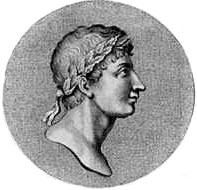
"indicat auctorem locus?"
Ovid, EX PONTO, I. VII.
According to the Dartington.org website, the site on which Dartington Hall stands has been continuously occupied for well over a thousand years.
Create a fictional character (with a fictional name) who used to work at Dartington, in any capacity, in any of Dartington Hall's many past incarnations. Roman legionnaire forced to dig latrine? Dorothy and Leonard Elmhirst's butler (if they had one)? Write a short epitaph for this character (100 words, first person), and post it to the blog with the characters name as the post title. Write an even shorter 140 character epitaph for your character for Twitter, including your characters name in the Tweet. Write at least three more 140 character sentences about your character for Twitter, which include the character's name and refer directly to the character's relation to the place (Dartington Hall).
Also for next week, photograph or scan your postcards and add them to your postcard story blog posts. Link the sentence(s) in your story that came from another student's zine to the post containing those sentences - see my postcard story post as an example: I've Died And Gone To Devon
The fourth assignment will be to create a map in Google Maps, My Maps. You will need a Google account to do this. Sign up for one and familiarize yourself with Google Maps, My Maps for next class: http://maps.google.co.uk/
Reading:
- On Locative Narrative, Rita Raley (https://twitter.com/ritaraley)
- in absentia, J. R. Carpenter http://luckysoap.com/inabsentia
"Outside the window was like a map, except that it was in 3 dimensions and it was life-size because it was the thing it was a map of. And there were so many things it made my head hurt, so I closed my eyes, but then I opened them because it was like flying, but nearer to the ground, and I think flying is good. And then the country side started and there were fields and cows and horses and a bridge and a farm and more houses and lots of little roads with cars on them. And that made me think that there must be millions of miles of train track in the world and they all go past houses and roads and rivers and fields, and that made me think how many people must be in the world and they all have houses and roads to travel on and cars and pets and clothes and they all eat lunch and go to bed and have names and this mad my head hurt, too, so I closed my eyes again and did counting." Mark Haddon, The Curious Incident of the Dog in the Night-Time, NY: Vintage, 2003, pp 160-161.
Flower Child

She collects mussels from the shore and drinks jasmine tea by the sandbucketful, the flower wavering beneath her lips like a sea anemone. She was always a hoarder of flowers. In her student days, they filled her rickety room. Jam jars and jam jars, and behind them more, of musty rootwater. She picked wildflowers before there were laws against that sort of thing, holed up shy little vole, making her meticulous botanical studies. Now she only picks the flowers in her gardens. She leaves the wild orchids to the bees though. That the landscape could produce such tender flowers, blushing, freckled things.
By contrast, Dartington’s prettiness is cultivated. Totnes, though however unlikely, might have a claim to being the birthplace of British Civilisation. Ardnamurchan is where that Civilisation ends. Hadrian’s Wall might have mostly come down, but it’s there in spirit. The wind gives the landscape something of a facial peel. Trees bent as barbed wire, hillsides scoured away with pan-scrubbers. Used to be a military site, but the shell scars barely scratched the surface of the mountains’ wild silence. Her face is scrubbed blank too. Given a vigorous, rigorous clean with carbolic soap and heather every morning before she sits down behind the potters’ wheel. That’s what she learnt here. It doesn’t seem so long ago, perhaps because, aside from revolutionary spirit and length of hair, she has barely changed. Merely moved from a breeding ground to a retirement home for old hippies, and gradually grown into the landscape.
The march
Up and down we march for endless weeks of something. Windows we pass, lines of colourful array.. but we just march on penniless as we are, my arm through yours, your arm through mine. Under that arch we go. You wearing that hideous brown coat, the one I hate so much. You used to drape it over me when I was young and felt sick on Saturday afternoons. I would lay still on the sofa, hideous under that itchy monster. To me it still smells of sickness.. I think it ridiculous and my arm itches terribly, placed through yours against its terrbile surface.
Parade of shops we skip past, the brown drapery sweeping around your ankles. You laugh and I realise I haven't told you how beautiful you are lately.. We watch the street in the ever changing colours of day and are the sole witnesses of the yellow colour of the arch turning to gold at dusk.
To my vision that street and your arm are the world. I cannot see your old skin or tired eyes, just like I cannot see the old buildings the bright lights are housed in. All is bright and alive and the hill presents no challenges to our new limbs or perfect breath. We march on endlessly, looking ridiculous.. You old in a shaggy coat, me young in a T-shirt with the goose-bumps rising up from my frozen arms.
Parade of shops we skip past, the brown drapery sweeping around your ankles. You laugh and I realise I haven't told you how beautiful you are lately.. We watch the street in the ever changing colours of day and are the sole witnesses of the yellow colour of the arch turning to gold at dusk.
To my vision that street and your arm are the world. I cannot see your old skin or tired eyes, just like I cannot see the old buildings the bright lights are housed in. All is bright and alive and the hill presents no challenges to our new limbs or perfect breath. We march on endlessly, looking ridiculous.. You old in a shaggy coat, me young in a T-shirt with the goose-bumps rising up from my frozen arms.
not where I want to be
It's raining here. It's horrible. As soon as I got here I hated it. It's just so cold and wet. This is starting to get boring here. I had a terrible journey getting here, the coach got stuck in traffic then they emptied my bags at check-in just to piss me off. The plane was delayed and then I lost my wallet in my hand luggage. After six entire searches of my bags I found it in my pocket. Uncle John did pick me up when I finally landed here. Only problem he picked me up the day after I landed. In the wait I practically dislocated my spine lying across three terminal seats in an attempt to get some rest. Once we got all of my bags in the car Uncle John insisted he give me a tour of his new four-wheeled transport, much to my displeasure. We got here after what seemed like a tour of the entire low-countries of the western hemisphere. I cant wait to go home. I've gone mad and I've only been here two days. Don't feel bad for sending me here, I know you thought it would be for the best. After all how long can a year last?
The Hills Have Thighs

I was sitting in a pub by myself, morosely drinking a pint of stagnant local ale. This man approaches me, vigorously rubbing his face. He says that happiness is not far; that tranquillity can be attained atop a heap of rocks on the horizon. He takes me outside and points to a hill called Bell Tor. He forces me up the hill, until we reach the halfway point. He tells me that I must be alone, to banish the sorrow within myself. Until then I hadn't thought in needed guidance, but the peak seemed to exude some evangelical promise. I traversed up, till I had almost reached the peak, then I saw the same man. I was sure he had walked off in the other direction, but something was altered in his appearance. He looked less groomed, and more savage. He had his throat slit. I noticed a pile of dismembered hikers and tourists behind him. He lunged at me, so thoughtlessly I pushed him over. His head bounced off the rocks, while his body rolled lifelessly behind. He landed in a thick patch of heather. Before seeing if he had disappeared, I ran down the hill and back to the pub. I saw the man again, and asked him what he was doing up there. He said that was just his brother. He then asked me if I gave him what he wanted. I looked down at my hands to see all my fingers missing. "That'll do" he said cheerily.
Dodos
Once upon a time, there was an old witch and a matricidal quintet of Italian chefs who crawled up five million miles of gas piping and out of a drain, all the way from hell. This pleasant culinary flock had flown back to Earth to watch their growing grandchildren (and, more importantly, the second part of the Gordon Ramsey biopic trilogy). The old witch had no purpose.
“How dead and empty are the streets!” she said.
But, alas, in their panic, her comrades had dispersed forthwith and forgotten all about her.
“This is starting to get boring here!” she called.
Then suddenly, horribly, she became struck with the notion that no mortal would ever even recall, let alone appreciate, her contributions to this world. And so, with the intention of writing on the walls her name in their blood, she caught up with her associates and slashed their necks with a machete she kept in her left stocking.
Curses, she thought, ghosts can’t bleed.
In one final act of desperation, she snatched a piece of passing card bearing the letters ‘T-O-T-N-E-S’ and tried to carve her name in tears. Bugger and chagrin, she muttered. Only then did she remember she had forgotten her name and could not cry after all. In the end, she decided to bend one corner of the card.
And shortly after, a northern squad of Hell’s bureaucratic fuzz came and recaptured the escapees, torturing them on the way with nooses made of red tape. The end.
Lost in the Gardens
At the start I was looking for the light. It was nowhere. Just the branches, thick and heavy branches stretching out above and around me like a thousand rakish fingers dotted with leaves that contorted and knotted in their death throes as the autumn air suffocated and froze them. No light, well some light, the moon was above me but choked by clouds it’s light had dwindled until it was useless, just a sphere of cheese in orbit two-hundred and thirty-eight thousand miles above Dartington too dim to even illuminate the face of my watch. What time is it? Have to get through the Gardens, have to get to the Roundhouse. I’ve got a promise to keep and I’m not in the habit of letting people down, well okay, maybe I am but I do try to avoid it as best as I can.
My feet are wet, bloody canvas shoes. I’m kicking up flurries of leafy-mulch with every effortful stride. My straying from the pavement to find a shortcut has epically failed, this side-path is essentially a trail of exposed tree roots that no grass or weed can penetrate. I’m late already. Why aren’t the guiding lights of Lower Close and the Hall beaming through the scattering of trunks and bushes? This is hopeless. I won’t enjoy myself when I get there now anyway; knackered and wet and muddy. I’ll just apologetically get a round in a sit unenthusiastically at a table occupied by smiley, cheery laughing people. Bugger.
Tuesday, November 24, 2009
I've Died and Gone to Devon
England is a small country, unless you're driving across it. The three-hour drive from Heathrow to the West Country really takes four. From the M3/A303 you'd think the whole country was countryside. The deeper into Devon you drive, the narrower and more winding the roads. In North America, roads this narrow wouldn't even count as driveways. If this is the wrong side of the road, I don't care what's right. If this is the driveway, I thought, half a mile in, then I can’t wait to see the house. The house stands on a promontory in a bend in the River Dart. Meanders don’t last forever, but this house might. It's so quiet here at night. The slightest sound carries. A full moon whitewashes the hoot-owl-haunted high-tide river. At low tide stippled water runs over rucked sheets. Rain on magnolia leaves produces a dry, rustling sound. English optimism turns "mostly cloudy" into "sunny intervals". It rains sideways all day, until we decide to row down for a half at Ferry Boat Inn. A half moon rises over Dittisham. Fall flotsam on a tidal river is a strange mixture of oak leaves and seaweed. Cormorants line the bank, great wings hanging like laundry to dry. A pair of swans swans about near the slipway at Blackness. Don't laugh at the Caution Slipway May Be Slippery sign. It may be true. There are egrets, no regrets. This the most achingly beautiful place to come across a little death.


The Yachts of Salcombe Estuary

Look at the yachts, with their brightly coloured sails. And the seagulls! Let’s see how many we can count. There’s one, and another. I only see two, but I hear many more. See them soar towards the sea; their shrieks scratch at my bones. I sit with my toes in the sand, watching the sand spiders hurry away confusedly as I create mountains in front of them. The albatross sits atop its nest; screaming its hunger at the sea occasionally, awaiting its mate’s return for a chance to end its pangs. Over there is the rotting carcass of a rowing boat. Its ribs reach from the sand like they are desperate to feel warmth again, even if it’s only from the sun and not from a beating heart. Its spine is half-buried by the sand, sinking to paralysing depths. Its heartlessness aches familiarities, yet the anemones keep it company, clinging to its bones. The sun escapes from behind a cloud, its rays touching the outreached tendrils of the anemones. The children laugh on the beach, the smell of the fish and chips wafting down from the promenade, the tinkling tune drifting along the road from the ice-cream van.
Sand blasted daisies sway in the park, their yellow faces smiling at the sun as the sea breeze tickles their petals and the grass dances in rhythm. And I lay back, the children running around me, flicking sand at each other and screeching like the gulls overhead.
Sand blasted daisies sway in the park, their yellow faces smiling at the sun as the sea breeze tickles their petals and the grass dances in rhythm. And I lay back, the children running around me, flicking sand at each other and screeching like the gulls overhead.
By Kate Rolison (as her Blogspot won't let her post, ahhh!)
She collects mussels from the shore and drinks jasmine tea by the sandbucketful, the flower wavering beneath her lips like a sea anemone. She was always a hoarder of flowers. In her student days, they filled her rickety room. Jam jars and jam jars, and behind them more, of musty rootwater. She picked wildflowers before there were laws against that sort of thing, holed up shy little vole, making her meticulous botanical studies. Now she only picks the flowers in her gardens. She leaves the wild orchids to the bees though. That the landscape could produce such tender flowers, blushing, freckled things.
By contrast, Dartington’s prettiness is cultivated. Totnes, though however unlikely, might have a claim to being the birthplace of British Civilisation. Ardnamurchan is where that Civilisation ends. Hadrian’s Wall might have mostly come down, but it’s there in spirit. The wind gives the landscape something of a facial peel. Trees bent as barbed wire, hillsides scoured away with pan-scrubbers. Used to be a military site, but the shell scars barely scratched the surface of the mountains’ wild silence. Her face is scrubbed blank too. Given a vigorous, rigorous clean with carbolic soap and heather every morning before she sits down behind the potters’ wheel. That’s what she learnt here. It doesn’t seem so long ago, perhaps because, aside from revolutionary spirit and length of hair, she has barely changed. Merely moved from a breeding ground to a retirement home for old hippies, and gradually grown into the landscape.
By contrast, Dartington’s prettiness is cultivated. Totnes, though however unlikely, might have a claim to being the birthplace of British Civilisation. Ardnamurchan is where that Civilisation ends. Hadrian’s Wall might have mostly come down, but it’s there in spirit. The wind gives the landscape something of a facial peel. Trees bent as barbed wire, hillsides scoured away with pan-scrubbers. Used to be a military site, but the shell scars barely scratched the surface of the mountains’ wild silence. Her face is scrubbed blank too. Given a vigorous, rigorous clean with carbolic soap and heather every morning before she sits down behind the potters’ wheel. That’s what she learnt here. It doesn’t seem so long ago, perhaps because, aside from revolutionary spirit and length of hair, she has barely changed. Merely moved from a breeding ground to a retirement home for old hippies, and gradually grown into the landscape.
Dartmouth Castle

I don’t pay attention much, but I can see enough to see the lie of this postcard. Mostly what I see is rain spatters, droplets on glasses, and mist. Even the greenery is grey and faded. At low tide the stippled water runs over rucked sheets. If rucked sheets were river creased black stone; any metaphor will break down under scrutiny. Then the waves come rushing back, breathtaking, thought stopping, white, foam-like Neptune’s horses throwing themselves across the water and breaking their necks on the slimed stones. Spray soaks castle walls and wooden steps seemingly designed to send me slipping and staggering, and I forget the irony, oh the irony, of sunny postcard skies over calm postcard seas.
Choking on the Laughter of Ephemeral ponies

Around this time of year the ponies are particularly guarding over the moor's legacy, there is a sway in their steps as they meander down the ditch. A heady tang I will never forget, we watch the crumbs of our bread and cheese turn to stone as you ask; "Is the sky always this purple?"
And from the Hay I walk on the moon to the hounds that watch over this land. I stop to twist my alphabet into a letterbox, to leave an overdue recollection, and you rush off ahead to churn and mull over your escalating thoughts. We unite again ten minutes in the past, reminiscing five miles into the future whilst fumbling to grasp onto a slice of the present.
We stop to console the young girl at the crossroads; I rest against Bowerman and feel his blood moving. You quake on the featherbed as a thick rolling mist beckons us towards Princetown. Things take a turn for the worse as the prisoners of war pass through us. Then you find us walking over Two Bridges although we are unable to crawl over one.
Watching the granite dance on the Sabbath from atop a headless horse I catch the top hat you throw me, adorn my head as I sink into your inner monologue. Upon feeling the frost for the very first time I turn, and reply; "Yes it's usually purple at this time in the morning." You tell me it's been three hours, but I'm convinced it's been five days.
Saturday, November 21, 2009
VO....YA....AGE
1. The concept of stillness, an idea of solitary scenes moulding themselves through the natural tides, with the humans weaving beneath.
2. There is a much greater freedom in the Dart, a willingness for people to contribute - it felt like i'd opened my mind out.
3. "I am no bird; and no net ensnares me; I am a free human being with an independent will".
4. The language of the river, the words of the people........tumbling.......tumbling........tumbling.
5. Me the poet, Me the reader, Me the self.
2. There is a much greater freedom in the Dart, a willingness for people to contribute - it felt like i'd opened my mind out.
3. "I am no bird; and no net ensnares me; I am a free human being with an independent will".
4. The language of the river, the words of the people........tumbling.......tumbling........tumbling.
5. Me the poet, Me the reader, Me the self.
Thursday, November 19, 2009
The Dull Cynic's Guide to the River Dart
Dartmoor
The River's waters start their flow at one of Britain's greatest natural beauties; Dartmoor... there's not a decent chippie or pub for miles and miles and miles.
The Clapper Bridges
A form of bridge of prehistoric origin made from slabs of granite that can still be found and traversed today, probably because the council can't be arsed to replace them.
Buckfastleigh
Soon after leaving moorland the Dart flows past Buckfast Abbey where the monks are known to practice beekeeping... as if anybody cares in the slightest about that.
Totnes
And after a whole load of nothing you get to this market town called Totnes. There's some right weird types there, full of the arty-farty lot... but some all right pubs.
Dartington
As if there aren't enough places with 'Dart' in the name and there's an art college nearby too... bloody hippie kids. P.S. The cider press isn't working AN OUTRAGE!
Dartmouth
And now we come to where the River surges out into the English channel, there is a castle but it's pretty small and not really worth the effort. (Also 'Dart' in the name AGAIN)
The River's waters start their flow at one of Britain's greatest natural beauties; Dartmoor... there's not a decent chippie or pub for miles and miles and miles.
The Clapper Bridges
A form of bridge of prehistoric origin made from slabs of granite that can still be found and traversed today, probably because the council can't be arsed to replace them.
Buckfastleigh
Soon after leaving moorland the Dart flows past Buckfast Abbey where the monks are known to practice beekeeping... as if anybody cares in the slightest about that.
Totnes
And after a whole load of nothing you get to this market town called Totnes. There's some right weird types there, full of the arty-farty lot... but some all right pubs.
Dartington
As if there aren't enough places with 'Dart' in the name and there's an art college nearby too... bloody hippie kids. P.S. The cider press isn't working AN OUTRAGE!
Dartmouth
And now we come to where the River surges out into the English channel, there is a castle but it's pretty small and not really worth the effort. (Also 'Dart' in the name AGAIN)
Wednesday, November 18, 2009
Second Assignment - Postcards From Here
"A big bundle of postcards. The curdled elastic around them breaks. I gather them together on the floor.
Some people wrote with pale-blue ink, and some with brown, and some with black, but mostly blue. The stamps have been torn off many of them. Some are plain, or photographs, but some have lines of metallic crystals on them – how beautiful! – silver, gold, red, and green, or all four mixed together, crumbling off, sticking in the lines on my palms. All the cards like this I spread on the floor to study. The crystals outline the buildings on the cards in a way buildings never are outlined but should be – if there were a way of making the crystals stick. But probably not; they would fall to the ground, never to be seen again. Some cards, instead of lines around the buildings, have words written in their skies with the same stuff, crumbling, dazzling and crumbling, raining down a little on the people who sometimes stand about blow: pictures of Pentecost? What are the messages? I cannot tell, but they are falling on those specks of hands, on the hats, on the toes of their shoes, in their paths – wherever it is they are.
Postcards come from another world, the world of the grandparents who send things, the world of sad brown perfumes, and morning. (The gray postcards of the village for sale in the village store are so unilluminating that they scarcely count. After all, one steps outside and immediately sees the same thing: the village, where we live, full-size, and in color.)"
Elizabeth Bishop, "In the Village," The Collected Prose, FSG, page 255.

Assignment: Using a "found" postcard as a starting point, write a postcard story of a maximum of 250 words. You don't have to write the story on the postcard. The postcard must represent (or strongly resemble) a local place. The postcard story must refer to the image and place on the postcard, however tangentially, must tell us something about the place that the image does not, and must use one sentence from another student's zine.
For next week:
- post your postcard story to the blog
- include an image of the found postcard in the post
- tag the post with "postcards" and any other labels you think appropriate
- bring the postcard and a print copy of the story to class
- find and follow each other on Twitter
- rewrite your zine sentences as 140 character tweets
- READING: http://www.geist.com/opinion/geist%E2%80%99s-literary-precursors

"Nothing is more occult than the way letters, under the auspices of unimaginable carriers, circulate through the weird mess of civil wars; but whenever, owing to that mess, there was some break in our correspondence, Tamara would act as if she ranked deliveries with ordinary natural phenomena such as the weather or tides, which human affairs could not affect, and she would accuse me of not answering her, when if fact I did nothing by write to her and think of her during those months - despite my many betrayals."
Vladimir Nabokov, Speak, Memory
Tempest
Please don't sulk
Stop spitting at me as I walk alongside you
And you rush off ahead to churn and mull over your rapidly escalating thoughts
I know I haven't been looking at you lately like I did in the summer
But you know how it is
Sometimes it's raining and you just want to get the shopping home
And you don't help at all with your rages you know, you really don't
The thin filmy white bags carve into my palm and I could swear, could swear you splash a little more water into the mud, just to trip me up
Ok, ok I'm sorry, I owe you an apology; I've taken you for granted these past few months. I haven't told you how beautiful you are lately.
Home Map: for veiled, sleeping nomads
1. Wrap up warm, start journey with tight laces, walk, after 10 days turn left at the end of a wooden leaf-litter bridge harbouring a Persistence-of-Memory tree (BEWARE, if you scratch your initials on its branches your watch will burn a hole in your arm immediately).
2. Maple Mao-Tse tung, march uphill, past a steam boat floating a crowd of drunken, aristocratic Liliputins.
3. Walk plaintive meander to cotton woods to the Breton leaves (jot down his sleepy ideas Koreas careers sightseers (for your own rusty valve of inspiration).. checkmate cobble.
4. Skip over Kandinsky pavement, follow the water.
5. Tread a prison bridge and try not to get mud in your pockets.. meat the Eiffel Tower, turn left for front door.
2. Maple Mao-Tse tung, march uphill, past a steam boat floating a crowd of drunken, aristocratic Liliputins.
3. Walk plaintive meander to cotton woods to the Breton leaves (jot down his sleepy ideas Koreas careers sightseers (for your own rusty valve of inspiration).. checkmate cobble.
4. Skip over Kandinsky pavement, follow the water.
5. Tread a prison bridge and try not to get mud in your pockets.. meat the Eiffel Tower, turn left for front door.
La Riviere Dart
Two brothers, both so alike in their gait, meet to quarrel, but ultimately bond.
Where giant wood wheels spin, pulverise, and dry, and merchants sell their wares in days of old.
Among these majestic beasts of stone, I reside amongst humbler beings.
And this even greater creature, forged of necessity in later days, has fallen.
But here lay our founding father, the king of our nation, and namer of our town.
5 sentences and a title
Minimum four colours
nose blunt into the current, memory sediments
a single theory unites all narrow watercourses
at low tide stippled water runs over rucked sheets
emanations rise through slick mud
riverbed ram gut point floodflux
This is where I put the stick in.
That's the last i saw of them, i swear.
So we went to find somewhere better.
This is starting to get boring here.
It's getting too slow now.
Fish swam under the stick just there.
This is where it hit the rock and i thought it was all over.
Unknown River
At the start I was looking for the lights.
Through the depths of the water I reflect far and wide.
Waiting in my world for a guide to step outside.
Darkness is creeping through the city limits.
I will walk directionless, till the unkown end.
Through the depths of the water I reflect far and wide.
Waiting in my world for a guide to step outside.
Darkness is creeping through the city limits.
I will walk directionless, till the unkown end.
Tuesday, November 17, 2009
The Dart Valley Foot Path
I lived at Sharpham House for four weeks without a car before I figured out that I could walk into Totnes in under and Hour.
It gets so muddy along the Dart Valley Foot Path it's no wonder all the cows around here are brown.
The need for knee-high high-gloss violet classic Hunter wellingtons soon became overwhelming.
The painful space between the heart and the credit card is probably the soul.
Totnes is pronounced like Loch Ness, only the monster is silent.
It gets so muddy along the Dart Valley Foot Path it's no wonder all the cows around here are brown.
The need for knee-high high-gloss violet classic Hunter wellingtons soon became overwhelming.
The painful space between the heart and the credit card is probably the soul.
Totnes is pronounced like Loch Ness, only the monster is silent.
Subscribe to:
Posts (Atom)